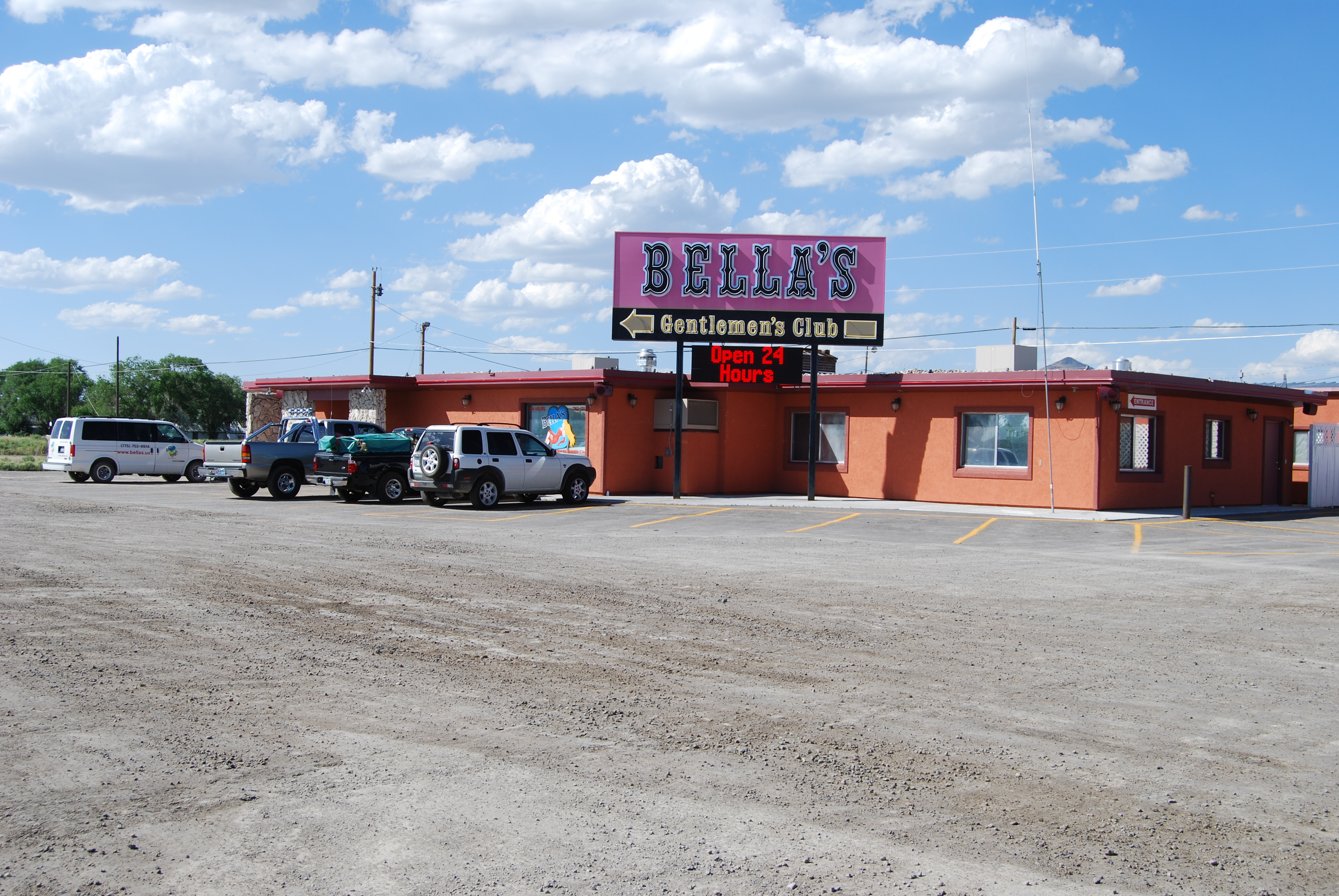
Ask how big Nevada’s legal brothel industry is and the easiest answer is 16. As of August 2026, there are 16 operating legal brothels scattered across six of Nevada’s rural counties.
But counting brothels tells us surprisingly little about the actual size of the industry.
How many sex workers work in those 16 businesses? How many could legally work at the same time? How many customers do Nevada’s brothels serve in a year? These would seem like relatively simple questions to answer for a legal and heavily regulated industry that has existed in its present form for more than half a century.
Over the years, estimates of Nevada’s brothel industry have appeared in newspaper articles, academic studies, legislative testimony and government documents. Some count sex workers. Others count work cards. Customer estimates variously refer to “clients,” “patrons,” “visitors” and even “sex acts,” often as though those terms mean the same thing.
Brothel Nevada began by collecting information about the state’s operating brothels and the sex workers publicly affiliated with them, then went considerably further down the rabbit hole in an attempt to answer a broader question: How big is Nevada’s legal prostitution industry, really?

The Workers: How Many Sex Workers Actually Work in Nevada’s Brothels?
Earlier this year, Brothel Nevada began compiling the names of sex workers publicly affiliated with Nevada’s legal brothels. Between January and August 2026, that research identified 358 publicly substantiated house affiliations among the state’s 16 operating brothels.
A little context for that number: It does not mean 358 sex workers were working in Nevada at the same time. Nor is it a complete count of every person who has worked in a Nevada brothel this year. Some sex workers were affiliated with more than one house, while others may have worked without leaving behind a public record we could independently verify.
What the number does show is how sex workers move through the legal brothel system. Over the course of a year, workers arrive, leave, return and sometimes move from one brothel to another. A brothel capable of accommodating 20 sex workers at one time may consequently have many more than 20 individual workers pass through its doors during a calendar year.
A 2017 audit of Lyon County’s brothel work-card system shows just how different those numbers can be. The county issued 342 prostitute work cards representing only 241 distinct individuals. According to the audit, 101 people received multiple cards during the year, in part because workers changed brothels or left the industry and later returned. Of the 241 people identified, 147 had less than a year of employment and 25 also held prostitute licenses in Nye or Elko counties.
One worker, in other words, can become several administrative records as she moves through Nevada’s brothel system. At the same time, one position at a brothel can be occupied by many different workers over the course of a year.
This is why counting sex workers in Nevada is considerably more complicated than counting brothels.
How many could work at once?
A different way to measure the industry is to ask how many sex workers could be working in Nevada’s legal brothels at the same time. That question is harder to answer because Nevada has no single statewide rule for brothel capacity.
Nye County provides the clearest example. Brothel license fees there are based in part on the maximum number of prostitutes permitted to work “at any one time,” using categories ranging from five or fewer workers to 26 or more. Other jurisdictions approach the question differently. Lyon County licenses brothels partly according to the number of rooms, Storey County can place limits on the number of prostitutes working in an operation, and Wells ties staffing to numbers contained in each brothel’s business management plan.
Nevada regulates its legal brothels closely, but there is no single statewide record showing how many sex workers all of those brothels could accommodate at once.
So Brothel Nevada attempted to reconstruct the number house by house. Where a current licensing limit was available, we used it. Where it wasn’t, we looked for a brothel’s stated operating maximum, credible descriptions of its operating scale and, when necessary, physical evidence such as worker bedrooms. We did not assume that every bedroom represents one licensed worker or that every sex worker with a profile on a brothel website is actually working there at the same time.
Nye County gave us some of the clearest numbers. Its brothel licenses are divided into worker categories of 1–5, 6–10, 11–25 and 26 or more. Sheri’s Ranch is licensed for a maximum of 25 sex workers at one time. Chicken Ranch has publicly shown more than 10 workers present at once, placing it in at least the 11–25 category, although we did not locate its current individual licensing record. No currently operating Nye County brothel is licensed in the 26-or-more category.
Lyon County presented a different problem. The county’s brothel licensing schedule divides licenses into room-based categories. Combined with Lyon County’s prostitution-license revenue, those records indicate that BunnyRanch, Sagebrush Ranch and Love Ranch collectively occupy two licenses in the 1–20-room category and one in the 21–40-room category. It would be tempting to simply add 20 + 20 + 40 and call 80 the county’s maximum capacity. We found no provision in Lyon County law, however, establishing that one licensed room equals one sex worker, so we didn’t.
Elsewhere, the evidence varies. Mustang Ranch has been described at different points as operating with roughly 30 sex workers, while the Desert Club states directly that it can have only three companions on shift at one time. Property records provided additional clues for several of Elko County’s smaller brothels, while other houses remain more difficult to measure precisely. In Wells, for example, city law tells us that Bella’s Hacienda and Donna’s Ranch have staffing numbers in their business management plans, but those numbers were not contained in the public records we were able to find.
So how many legal sex workers could Nevada accommodate?
Based on the licensing records, operating statements and physical evidence we were able to substantiate, Brothel Nevada estimates that Nevada’s 16 operating legal brothels could accommodate roughly 175 to 230 sex workers at one time, with the available evidence centering around approximately 205 positions.
This is a Brothel Nevada estimate, not an official Nevada statistic. The range reflects the fact that some brothels have clear numerical limits while others can only be measured through less precise evidence. For that reason, we don’t think the available records justify reducing the estimate to a single exact number.

The Customers: How Many Customers Do Nevada’s Brothels Actually Serve?
Put beside the 358 house affiliations documented during the first eight months of 2026, our capacity estimate illustrates how much turnover exists within Nevada’s relatively small legal brothel system. But knowing how many sex workers can work at once still leaves the other half of the equation unanswered: How many customers are they actually serving?
For years, one number has appeared often enough to look like the answer: 400,000 customers a year.
UNLV’s 2012 Sex Industry and Sex Workers in Nevada report states that Nevada’s legal brothels serve 400,000 clients annually. The figure appeared again in the report’s 2017 update. Read on its own, it looks like a UNLV estimate. Follow the citation, however, and it leads somewhere else: George Flint, the longtime lobbyist for Nevada’s brothel industry.
Where did 400,000 come from?
On April 7, 2009, Flint appeared before the Nevada Senate Committee on Taxation to support a proposed $5 tax on brothel customers. “When things are good,” he told legislators, the brothel industry has around 400,000 clients a year. He then multiplied 400,000 by $5 and told the committee the tax would generate $2 million for the state. The testimony provides no survey, house-by-house accounting or other explanation for how Flint arrived at 400,000.
Six days earlier, the number was different.
An April 1 Department of Taxation fiscal note for the same bill said the department had contacted Flint, who advised that business was down. After contacting the brothels, according to the fiscal note, Flint supplied an estimate of 365,000 patrons a year statewide. That figure became the basis for the department’s projected $1.825 million in annual revenue from the proposed $5 tax. The fiscal note does not explain what the brothels reported to Flint or how the 365,000 figure was calculated.
The choice of 365,000 is especially interesting because the exact same number had already been circulating for years.
In 2001, an Associated Press report by Angie Wagner said the Nevada State Health Division estimated that 365,000 sex acts, or exactly 1,000 per day, were performed annually in the state’s then-27 legal brothels. Brothel Nevada searched state health reports and other government material from the period but has not yet located the underlying calculation or a published Health Division report explaining how the estimate was produced. The AP attribution itself is clear; we could not find the underlying methodology in any of the state records available online.
And 365,000 was hardly the only statewide estimate Flint used.
In 1998, Flint told the Associated Press that half a million clients came into Nevada brothels every year. In 2010, appearing before the Nevada Senate during a special session, he again offered a $5 charge on every brothel “encounter” and said it would produce approximately $2.5 million annually. Simple arithmetic puts the volume behind that proposal at 500,000 encounters a year.
So over a little more than a decade, the public estimates include 500,000 clients, 365,000 sex acts, 365,000 patrons, 400,000 clients and another implied 500,000 encounters.
Even the words being counted keep changing.
The 2009 tax bill demonstrates why that can become a problem. Senate Bill 369 would have imposed $5 for each calendar day, or portion of a day, that a patron used the prostitution services of a particular prostitute. A customer seeing two different sex workers in one day could therefore generate two taxable events. A customer seeing the same worker twice during the same day could still generate one. The unit contemplated by the bill was not necessarily a unique customer, a brothel visit, a sexual encounter or a sex act.
None of this gives us a good reason to dismiss 365,000 or 400,000 as physically impossible. It does give us a reason to stop treating 400,000 as though Nevada or UNLV conducted a statewide customer count and arrived at that number.
What has anyone actually counted?
There is better evidence of customer volume at individual Nevada brothels, although much of it is now decades old.
One of the strongest examples comes from the Chicken Ranch in Pahrump. Researchers examining medical and employment records for 246 sex workers who worked there from March 1982 through December 1989 reported that the brothel sold services to 87,000 men during the study period. Unlike a statewide estimate supplied by an industry representative, this figure was connected to researchers examining nearly eight years of actual house records.
Academic researchers also produced some unusually useful snapshots of individual worker volume. In a 1993 study at Mustang Ranch #1, Mustang Ranch #2 and Old Bridge Ranch, 44 sex workers reported averaging six clients during the previous day, 36 during the previous week and 111 during the previous month. A separate 1995 field study, published in the American Journal of Public Health in 1998, found that 40 workers at two Nevada brothels had seen a combined 3,290 clients during the preceding month. Neither study was designed to calculate statewide customer volume, but together they provide something the statewide estimates do not: direct observations of how busy workers at major Nevada brothels actually were.
The old Mustang Ranch provides an even better example of why the terminology deserves scrutiny. The State of Sex, citing a 1994 paper by Suzanne Sonnier, says the old Mustang serviced approximately 200,000 customers a year. Alexa Albert’s later account describes roughly 325,000 men visiting the two Mustang brothels annually, and in a contemporary interview she was specifically asked about the ranch receiving “nearly 325,000 visitors each year.”
Those figures do not necessarily contradict each other. A visitor to a brothel is not necessarily a customer who purchases sex, just as a customer can purchase more than one service. The surviving sources do not give us enough information to turn either Mustang figure into a reliable annual transaction count.
The same problem keeps showing up. Nevada brothel statistics have counted customers, visitors, sex acts, patrons and taxable events, while later sources have often repeated the resulting numbers without preserving those distinctions.
The UNLV report that repeated the 400,000 figure also contains its own warning about the available data. Elsewhere in the 2012 report, the authors say no entities keep reliable statistics on Nevada’s sex industry and that the available figures should be treated cautiously. They recommend gathering statistics on the economic impact of sex businesses and specifically suggest that Nevada tourist surveys collect information about legal sexual consumption and visits to legal brothels.
More recent researchers have studied Nevada brothel customers, including their demographics, purchasing patterns and how their use of legal brothels compares with other forms of commercial sex. What we have not found is a modern, representative statewide study answering the most basic question of all: how many paid customers, visits or transactions Nevada’s legal brothels actually handle in a year.
This does not mean the underlying information doesn’t exist. Individual brothels maintain their own business records and may know exactly how many customers or transactions they handle. What is missing is a current, publicly available statewide accounting that combines comparable data from all of Nevada’s operating brothels.
Even if 365,000 or 400,000 accurately described the industry at some point in the past, they cannot simply be carried forward as estimates of the industry today. The Health Division figure dates to a Nevada with 27 operating brothels. There are 16 today.
For the modern Nevada brothel industry, there is no reliable statewide customer count available to the public.

So How Big Is Nevada’s Legal Brothel Industry?
By the simplest measure, Nevada’s legal brothel industry is smaller than it once was. But fewer brothels does not necessarily mean a failing industry. What has happened over the years looks much more like consolidation: many of the smaller, more remotely located houses have disappeared, while larger destination brothels in stronger markets have become increasingly important.
A falling brothel count therefore tells only part of the story. Losing a tiny rural house is not economically equivalent to losing one of Nevada’s major destination properties, and a declining number of licenses does not tell us whether customer volume or revenue has fallen at the same rate. The public data simply isn’t good enough to answer that question.
The physical scale of the modern industry is easier to measure. Nevada has 16 operating legal brothels, and Brothel Nevada estimates that the entire system can accommodate roughly 175 to 230 sex workers at one time, with the available evidence centering around approximately 205 positions. Far more workers can circulate through those positions over the course of a year.
How much business that system actually does is another question. The statewide customer figures most often repeated today originated decades ago, sometimes counted different things and were never replaced by a modern public accounting of customer or transaction volume.
Nevada’s legal brothel industry has not disappeared. It has consolidated. More than half a century after the modern system took shape, we can now make a reasonably good estimate of how many sex workers it has room for. How many customers those brothels actually serve remains a question the public data still cannot answer.
For more than half a century, Nevada has been conducting a uniquely American experiment with legalized prostitution. Fewer than 20 brothels now remain, yet the basic system has survived economic downturns, political fights, cultural change and the transformation of the sex industry itself. Nevada has shown that a small, regulated legal brothel system can endure. What it has never really answered is the larger question: whether that model could work on a much greater scale elsewhere in the United States. After more than 50 years, that part of the experiment remains unresolved.
Photos:
Mona’s Ranch in Elko, Nevada, 2015. Photo: Famartin / Wikimedia Commons, CC BY-SA 4.0.
Donna’s Ranch in Wells, Nevada, 2007. Photo: Geographer / Wikimedia Commons, public domain.
Angel’s Ladies signage near Beatty, Nevada, 2008. Photo: Joe Tordiff / Wikimedia Commons, CC BY-SA 2.0.