Ask when prostitution became legal in Nevada and you will usually get a year. The answer is often 1971. The real history is considerably more complicated.
Nevada’s modern brothel system did not begin with a single legalization law. It developed over generations as mining communities tolerated and regulated prostitution, local governments asserted control over where brothels could operate, counties adopted formal licensing systems, state lawmakers imposed new restrictions, and courts were repeatedly asked to define what those laws actually meant. Nevada’s current laws still reflect that unusual combination of state restrictions and local control.
This timeline focuses on the events that changed, clarified or significantly shaped Nevada’s brothel industry. It is not intended to catalog every historic brothel, madam, sex worker, scandal or mining camp. Many of those stories deserve to be told separately. The purpose here is narrower: to trace how Nevada went from nineteenth-century mining towns with visible prostitution districts to the regulated brothel system that exists today.
The 1800s
1859: The Comstock Rush Transforms Nevada
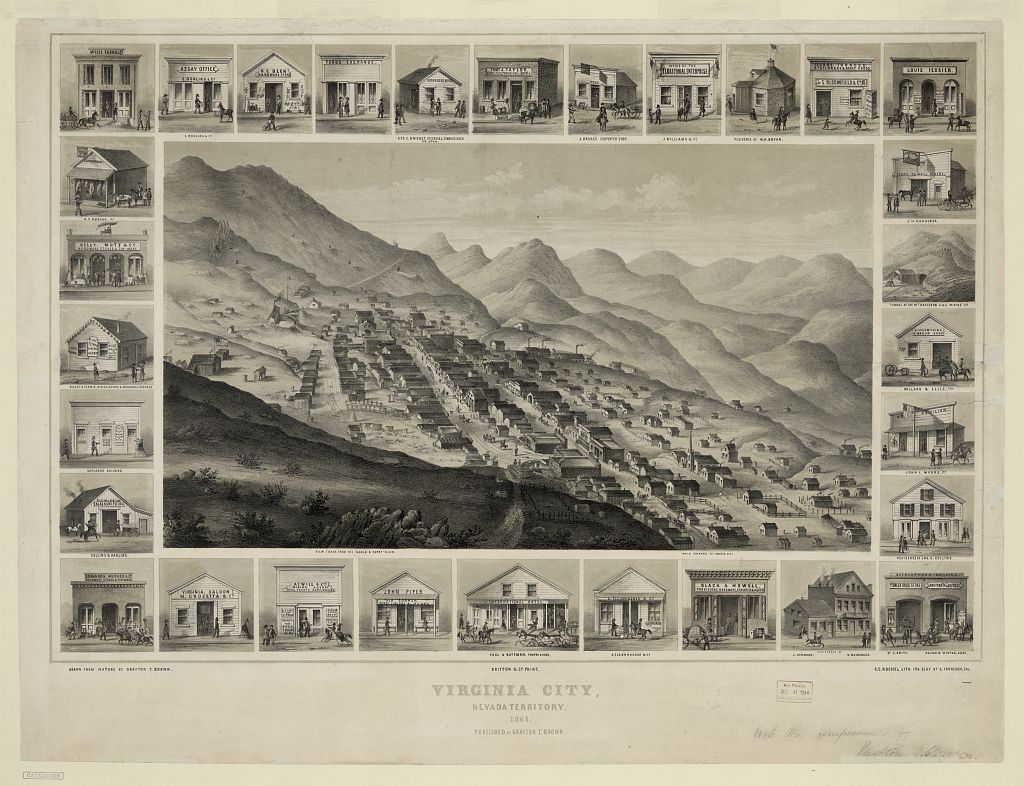
The discovery of the Comstock Lode in 1859 brought a rush of miners, merchants, speculators and other newcomers into what was still western Utah Territory. Virginia City grew quickly, and mining communities throughout the region developed the saloons, gambling halls, lodging houses and prostitution districts that became familiar features of Nevada’s boomtown economy. Historical research has found that prostitution was not simply an incidental presence in these towns. As those communities developed, local governments used ordinances and geographic restrictions to control vice, collect revenue and determine where brothels and related businesses could operate.
It would be a mistake, however, to call 1859 the year prostitution “began” in Nevada. The surviving record does not support that kind of precision. A Nevada Historical Society examination of the 1860 census found that women rarely reported occupations and cautioned against the popular assumption that the earliest Nevada mining settlements were immediately filled with prostitutes. The historical record becomes much clearer as the Comstock communities mature.
The importance of 1859 is the Comstock transformation that changed Nevada’s population and economy. It is a starting point for the story, not a claim about Nevada’s first brothel.
↓
1870: Census Records Document Prostitution in Virginia City
By 1870, the documentary evidence is considerably stronger. Research published by the Nevada Historical Society on Virginia City’s Chinese community found that 70 Chinese women were recorded as prostitutes in the 1870 census. The figure provides unusually specific evidence that prostitution had become an established part of the Comstock economy within little more than a decade of the original mining rush.
The records also complicate the familiar image of prostitution in the Old West. Chinese women were an important part of Nevada’s documented nineteenth-century sex trade, and historians studying the period have examined prostitution alongside immigration, racial discrimination and coercion. The census cannot tell us the circumstances of every woman it recorded, and it would be irresponsible to assume that all of them entered prostitution in the same way. It does make clear that the early history of Nevada prostitution was more diverse, and often more difficult, than the mythology surrounding frontier brothels tends to suggest.

The 1900s
1905: Prostitution Becomes Established Around Las Vegas’ Block 16
When the Las Vegas townsite was auctioned in 1905, Block 16 was designated for saloons. Prostitution soon became associated with the block and remained a visible part of downtown Las Vegas for decades. By the 1910 census, women identified as prostitutes were recorded as living there.
The distinction between tolerance and legalization is important. Block 16 became an accepted red-light district, but its existence should not be confused with the formal system of licensed brothels that Nevada developed much later.
↓
1936-1942: Opposition Grows and Block 16 Closes
Las Vegas tolerated Block 16 for decades, but organized opposition grew as the city changed. In 1936, Fannie Ryan, the wife of state Senator Frank Ryan, filed a nuisance complaint that became the first serious campaign to close the district.
The effort did not immediately succeed, but World War II brought additional pressure from military authorities concerned about prostitution near military facilities. Block 16 finally closed in 1942. Its closure did not eliminate prostitution from the Las Vegas area, but it ended the city’s best-known historic red-light district.
↓
1949: The Nevada Supreme Court Treats a Reno Brothel as a Public Nuisance
In Cunningham v. Washoe County, the Nevada Supreme Court considered an attempt to close a brothel operating on Commercial Row in Reno. The brothel argued that because Nevada law specifically prohibited houses of prostitution in certain locations, their operation elsewhere was implicitly lawful.
The court rejected that argument. It held that Nevada’s existing restrictions had not erased the common-law rule treating a house of prostitution as unlawful and subject to closure as a public nuisance.
The decision becomes more important later in the timeline. Nearly 30 years afterward, the Nevada Supreme Court would revisit Cunningham after the state’s brothel laws had developed into a formal county licensing system.
↓
1970: Storey County Establishes Formal Brothel Licensing
The modern licensing era began in Storey County. Historical research dates the county’s first formal brothel licensing ordinance to December 1970, when commissioners approved a system covering the Mustang Ranch. The following month, Joe Conforte’s wife and business partner, Sally Conforte, made the ranch’s first quarterly license payment. Contemporary Nevada histories identify the county measure as Ordinance No. 38.
The change was significant because the Mustang Ranch was no longer surviving primarily through local tolerance. Storey County had created a formal system for allowing and licensing the business.
↓
1971: Nevada Restricts Where Brothels Can Be Licensed
Nevada lawmakers responded quickly. In February 1971, the Legislature amended NRS 244.345 to prohibit brothel licenses in any county with a population of 200,000 or more. At the time, the restriction applied to Clark County and kept licensed brothels out of the Las Vegas area.
The population limit changed as Nevada grew. It increased to 250,000 in 1979, 400,000 in 1989 and 700,000 in 2011. The basic principle remained the same: Nevada would allow smaller counties to make their own decisions about brothels while preventing licensing in the state’s most populous county.
Historical Note: Did Nevada legalize prostitution in 1971?
Not exactly. Prostitution and brothels had existed openly in Nevada for generations, sometimes tolerated, sometimes regulated and sometimes suppressed. Storey County established formal brothel licensing in 1970, while the 1971 state law actually restricted where brothel licenses could be issued. Later court decisions further defined what counties could permit or prohibit.
There was no single moment when Nevada simply “legalized prostitution.”
↓
1973: Nevada’s Supreme Court Upholds County Discretion Over Brothel Licenses
In York v. Board of County Commissioners of Storey County, Irene York challenged Storey County’s refusal to grant her a license for another brothel. The Nevada Supreme Court upheld the county’s decision, establishing that a county permitting brothels was not required to issue a license to everyone who wanted one.
↓
1976: Oscar Bonavena Is Killed Outside the Mustang Ranch
Argentine heavyweight boxer Oscar Bonavena was shot and killed outside the Mustang Ranch in May 1976. The killing came during an already intense period of scrutiny surrounding Joe Conforte and his political relationships in Northern Nevada.
The incident became part of the ranch’s national notoriety. A Nevada Supreme Court opinion later noted that newspaper investigations of Conforte’s influence intensified after Bonavena’s death. Three Reno newspaper editorial writers subsequently received the Pulitzer Prize for their series examining Conforte’s influence and activities.
The story remained part of popular culture decades later and loosely inspired the 2010 film Love Ranch.
↓
1978-1980: Nevada Courts Define the Modern System of Local Control
Two Nevada Supreme Court cases helped define the legal structure that still characterizes the state’s brothel industry.
Nye County attempted to close the Chicken Ranch as a public nuisance. In Nye County v. Plankinton, the Nevada Supreme Court ruled that the state’s newer laws had created a statutory licensing system for brothels. The old rule that every house of prostitution was automatically a public nuisance could no longer be applied in the same way.
Two years later, Kuban v. McGimsey addressed the other side of local control. Lincoln County voters had chosen to prohibit brothels after years of local regulation. The Nevada Supreme Court upheld the ban, confirming that counties eligible to permit brothels could still choose to prohibit them altogether.
Together, the decisions clarified the system that had been taking shape throughout the 1970s: Nevada law allowed a regulated brothel industry, but local governments retained substantial control over whether brothels could operate.
↓
1979-1981: Nevada Restricts Brothel Advertising
Nevada added another boundary in 1979 by restricting brothel advertising in jurisdictions where prostitution was prohibited. The law soon faced a First Amendment challenge from Princess Sea Industries, the company operating the Chicken Ranch, along with newspaper publishers that wanted to carry its advertising.
In 1981, the Nevada Supreme Court upheld the restrictions in Princess Sea Industries v. State. A brothel could operate legally in a county such as Nye while still being restricted from advertising in places where prostitution itself was prohibited. The issue would return to federal court nearly 30 years later.
↓
1985: Nevada Brothel Owners Begin Organizing Politically
By 1985, brothel owners were coordinating statewide political representation through longtime Nevada lobbyist George Flint. Flint would spend the next three decades representing brothel interests before the Legislature and publicly defending the licensed industry.
This was an important change for an industry that had historically operated through individual owners and local relationships. Brothel operators now had organized representation in Carson City as state policy became increasingly important to their businesses.
↓
1987-1988: The AIDS Crisis Transforms Brothel Regulation
The AIDS epidemic brought some of the most consequential statewide regulation in the industry’s history.
In 1987, Nevada enacted legislation specifically addressing HIV and prostitution. The law made it unlawful to engage in prostitution outside a brothel licensed under NRS 244.345 and established serious penalties for someone who continued working as a prostitute after testing positive for HIV. It also created potential civil liability for brothel owners who continued employing a worker after knowing or having reason to know that the worker had tested positive.
Nevada’s State Board of Health followed in 1988 with a regulation requiring condom use in licensed brothels. Contemporary reporting and later legal scholarship both document the statewide requirement.
Nevada continued refining its testing and disease prevention rules over the following years, eventually incorporating the familiar brothel health requirements into the Nevada Administrative Code.
↓
1990: Federal Tax Action Forces the Sale of the Mustang Ranch
The Mustang Ranch had been operating under federal bankruptcy proceedings for years while Joe and Sally Conforte faced millions of dollars in unpaid federal taxes. In September 1990, a bankruptcy trustee briefly attempted to keep the ranch operating, but the effort failed. The bankruptcy court then denied the trustee permission to continue operating the brothel.
The IRS took possession on September 21 and sold the property at public auction in November. Mustang Properties Inc. purchased the brothel property, allowing the Mustang operation to eventually resume under a new corporate structure.
Historical Note: Did the federal government run the Mustang Ranch?
No. The confusion comes from the brief attempt by a court-appointed bankruptcy trustee to continue operating the ranch while the bankruptcy case was being resolved.
Federal court records are explicit that once the IRS took possession, it made no effort and had no intention of operating the Mustang Ranch as a brothel. The IRS seized the property for tax collection and sold it.
↓
1992: Dennis Hof Buys the Moonlite BunnyRanch
The Moonlite BunnyRanch had been operating for decades before Dennis Hof became associated with it. Hof purchased the property in 1992 and, over the following years, brought a level of publicity and self-promotion that was unusual for an industry that had traditionally operated much more quietly in rural Nevada.
The change was significant because Hof increasingly treated publicity itself as part of the brothel business. The BunnyRanch would eventually become nationally recognizable, and Hof would expand his holdings to include several other Nevada brothels.
↓
1999: The Original Mustang Ranch Is Seized and Closed
The Mustang Ranch that had resumed operating after the 1990 tax sale came under federal scrutiny again during the 1990s. In 1999, a federal jury returned guilty verdicts against AGE Enterprises, the corporation that owned the ranch, and two company employees on charges that included racketeering, money laundering and tax offenses. Federal authorities seized the property and shut the brothel down.
This time, the original Mustang Ranch did not reopen at its historic location. Its buildings were later purchased by businessman Lance Gilman and moved to another property in Storey County, where they were renovated and returned to brothel use in the mid-2000s. The Mustang Ranch operating today is therefore connected physically and historically to the famous Conforte-era ranch, but it is not located on the original Mustang Ranch site.

The 2000s
2001-2005: The BunnyRanch Becomes a National Media Brand
In 2001, The New Yorker published Rebecca Mead’s profile of Dennis Hof, American Pimp. The article described Hof applying modern marketing and publicity to prostitution and openly discussing his ambitions for a larger BunnyRanch business. It also described television producers visiting the property and considering a cable program set inside a legal brothel.
HBO’s first Cathouse documentary followed in 2002. Cathouse: The Series began in 2005, followed by additional episodes and specials. The programs gave a national audience an unusually close look inside a legal Nevada brothel and made Hof, the BunnyRanch and several of its courtesans recognizable far beyond the state.
The importance of Cathouse went beyond television ratings. For much of Nevada history, brothels had been locally tolerated or regulated businesses that generally operated away from mainstream public attention. The BunnyRanch era showed that a legal brothel could instead build a national consumer brand around publicity, personalities and entertainment.

The 2010s
2010: Federal Appeals Court Upholds Nevada’s Brothel Advertising Restrictions
The advertising restrictions upheld by the Nevada Supreme Court in 1981 returned to court decades later. Newspaper publishers and a licensed Nye County brothel owner challenged the laws on First Amendment grounds. A federal district court struck down the restrictions, but the Ninth Circuit reversed that decision in Coyote Publishing, Inc. v. Miller in 2010.
The ruling preserved the unusual distinction established decades earlier: a brothel could operate legally in one part of Nevada while still being prohibited from advertising that business in jurisdictions where prostitution was illegal.
↓
2015: The Lamar Odom Crisis Puts a Nevada Brothel in the Global Spotlight
Former NBA player Lamar Odom was found unconscious at Love Ranch South in Crystal in October 2015. The story immediately became international news, bringing extraordinary attention to Dennis Hof, the Love Ranch and Nevada’s legal brothel industry.
For many people outside Nevada, the incident was their first sustained exposure to the legal brothel system. The circumstances were unusual, but the enormous coverage meant that a single crisis at one rural brothel temporarily became the public face of an industry most Americans knew little about.
Nye County prosecutors ultimately declined to file drug charges against Odom, and the Love Ranch continued operating.
↓
2018: Dennis Hof Dies as Lyon County Voters Decide Whether to Keep Brothels
Dennis Hof died on October 16, 2018, at age 72. At the time, he was also the Republican candidate for a seat in the Nevada Assembly. His name remained on the ballot, and he won the election after his death. His four Lyon County brothels continued operating under longtime madam and company financial officer Suzette Cole.
Hof’s death came only weeks before Lyon County voters considered an advisory question asking whether county commissioners should rescind the county’s brothel ordinance. Because of the wording of the question, a No vote meant keeping legal brothels.
The result was decisive. On November 6, 2018, 16,643 voters, or 80.5 percent, voted against rescinding the ordinance. Another 4,031 voted in favor. The brothel ordinance remained in place.
Nearly four decades after Lincoln County voters chose to prohibit brothels, Lyon County voters were asked whether their county should move in the same direction and overwhelmingly voted to keep the existing brothel ordinance.
↓
2019: Nevada Lawmakers Consider a Statewide Brothel Ban
The Nevada Legislature confronted a much larger question in 2019. Senate Bill 413 would have prohibited brothel licensing throughout Nevada and removed the exemption that allows prostitution to take place legally inside a licensed house of prostitution. The bill’s official summary was unusually direct: “Prohibits prostitution in the State of Nevada.” It was introduced on March 21, 2019 and referred to the Senate Judiciary Committee.
SB 413 did not become law, but its introduction was historically significant. Much of Nevada brothel history had involved counties deciding whether or how to regulate prostitution within the framework allowed by state law. SB 413 proposed eliminating that framework altogether.
It represented a genuine attempt within the Legislature to end Nevada’s licensed brothel system statewide, rather than another local dispute over a particular house or county ordinance.

The 2020s
2020-2021: The Pandemic Shuts Down Nevada’s Brothels
In March 2020, Nevada’s legal brothels closed as part of the state’s response to COVID-19. They remained closed for more than a year. For licensed sex workers, the shutdown was particularly consequential because legal prostitution in Nevada could occur only inside licensed brothels. With the houses closed, their legal workplaces had effectively disappeared.
The prolonged closure also produced a legal challenge. In October 2020, courtesan Alice Little sued Gov. Steve Sisolak over the continued shutdown. A Lyon County judge denied her request for a preliminary injunction in January 2021, and Little ended the legal effort. Nevada’s brothels began reopening in May 2021.
COVID therefore created an interruption unlike anything else in the timeline. Elections had closed brothels in individual counties. Federal action had shut down the Mustang Ranch. Economic changes and ownership problems had ended individual businesses. The pandemic temporarily stopped the licensed industry across Nevada.
↓
2026: Sheri’s Ranch Courtesans File for Union Representation
A dispute over a new independent-contractor agreement introduced at Sheri’s Ranch in late December 2025 developed into a union-organizing drive in January 2026 and a formal federal representation proceeding the following month. On February 6, the Communications Workers of America filed a representation petition with the National Labor Relations Board covering 74 full-time, part-time and on-call courtesans at the Pahrump brothel.
The effort introduced a different set of questions into Nevada brothel history. The dispute involves whether the courtesans should be treated as employees for purposes of federal labor law, along with issues involving collective bargaining, independent-contractor classification and workers’ intellectual-property rights. Those questions had not been central to the earlier battles over whether brothels could exist, where they could operate or how counties could regulate them.
The unionization effort remains unresolved. As of August 2026, the NLRB lists the representation case as “Open – Blocked”. The filing therefore should not be described as a successful unionization. The filing marked the first time in this history that workers inside a licensed Nevada brothel had initiated a federal process seeking collective representation.
Featured image: Virginia City, Nevada Territory, 1861, drawn by Grafton T. Brown; lithograph by C.C. Kuchel. Library of Congress Prints and Photographs Division. No known restrictions on publication.