When A&E’s Secrets of the Bunny Ranch premiered in June 2025, I was curious to see the finished product.
The six-part documentary examines late bordello owner Dennis Hof, the Moonlite BunnyRanch, and Nevada’s legal brothel industry through interviews with former employees and others connected to the business throughout its history. It focuses on allegations involving Hof while contrasting the public image of the BunnyRanch with the experiences described by many of the people who participated. It is a documentary about one brothel, one owner, and the experiences of the women whose stories the filmmakers chose to include.
I watched it from a different perspective than most viewers.
About a year before the series premiered, one of my communications clients, legal sex worker Alice Little, told me she had been contacted by the producers. Because I represented Alice at the time, I soon found myself speaking with the production team as well. I had previously served as Communications Director at the Moonlite BunnyRanch for two years, and from our earliest conversations I was invited to appear on camera.
As the months passed, I continued answering questions about Dennis Hof, how the BunnyRanch operated, and the history of Nevada’s legal brothel industry. At one point, I joined a Zoom call with the show’s art director to sketch the layout of the BunnyRanch so the production designers could accurately recreate the property. I also suggested additional people the producers might find helpful, including former employees and others whose experiences extended beyond the BunnyRanch itself.
It was obvious they were investing significant time and resources into the project. That left me optimistic. Dennis Hof was a controversial figure, and a documentary about him shouldn’t pull punches. Everything I had seen suggested they were trying to comprehensively understand a subject that most viewers knew very little about.
As production continued, I suggested they speak with Bella Cummins, owner of Bella’s Hacienda Ranch. Bella was also a client of my communications agency at the time, but more importantly, she brought something to the conversation that I believed viewers would benefit from hearing.
Bella wasn’t interviewed because she admired Dennis Hof. She didn’t. She was a female brothel owner who had operated a successful licensed Nevada brothel since the 1980s and had developed her own philosophy about the business. She believed Dennis’s larger-than-life public persona often overshadowed other voices within Nevada’s legal brothel industry, including women who had spent decades building successful businesses of their own.
The producers interviewed Bella and filmed at her brothel.
Eventually, I decided not to appear on camera myself. Complications following skin cancer surgery had left me with a pronounced facial scar that I am still living with today, and I wasn’t comfortable appearing on television. By then, however, I had spent months talking with the production team and was looking forward to seeing the documentary they had described throughout that process.
Then the series finally premiered.
The first episode immediately struck me as different from what I had expected. As I continued watching, I realized I wasn’t simply seeing a critical examination of Dennis Hof. I was watching a documentary that had chosen to tell its story through a much narrower collection of voices than I had anticipated.
I watched the entire series, twice.
One segment in particular stayed with me. The documentary explores the experiences of women who completed tours at the BunnyRanch only to leave with little or no money after expenses. Those stories certainly deserve to be heard.
But, as I mentioned earlier, another interview subject was Alice Little.
During her years at the BunnyRanch, Alice consistently booked well over $1 million annually. The filmmakers already had access to someone whose experience represented a dramatically different financial reality inside the same brothel.
Including Alice’s success wouldn’t have diminished the experiences of women who struggled. It simply would have shown viewers that two licensed sex workers could work in the same brothel under the same owner and have entirely different outcomes.
I found myself thinking about Bella for much the same reason.
Bella wasn’t offered as a rebuttal to the women who criticized Dennis Hof, nor was she someone who would have defended everything he did. She represented something else entirely: a successful female brothel owner whose career demonstrated that Nevada’s licensed brothel industry had never revolved around one personality or one way of doing business.
The producers interviewed Bella. They filmed at her brothel. Yet that perspective was largely absent from the U.S. version of the documentary, although I was later told portions of her interview may have appeared in the European release.
If the producers had already interviewed people like Alice and Bella, both of whom complicated the story in very different ways, I couldn’t help but wonder how many other perspectives never made it into the final series.
I want to be clear about one point. I believe the women who participated in Secrets of the Bunny Ranch have every right to share their experiences. My concern isn’t that those stories were told. It’s that viewers never heard many of the others.
I don’t believe it is possible to understand Nevada’s licensed brothel industry through one brothel, one owner, or one collection of experiences.
Nevada’s legal brothel industry has never spoken with one voice. Brothel owners have different philosophies. Licensed sex workers have different experiences. Some leave the industry after deciding it’s not for them. Others build incredibly successful careers. People who worked alongside one another often came away with entirely different views of the industry itself. Understanding it requires acknowledging all of those perspectives.
I had spent more than a decade becoming intimately acquainted with Nevada’s licensed brothel industry. Watching Secrets of the Bunny Ranch, I often found myself looking at an industry that felt strangely unfamiliar.
Jeremy Lemur is a Nevada communications professional who has worked in the state’s licensed brothel industry for over a decade.
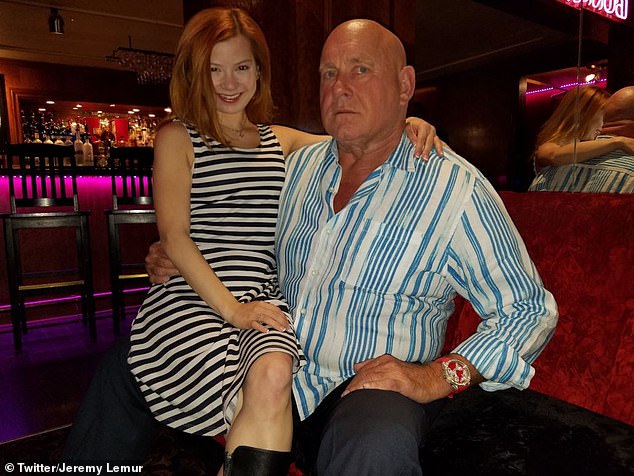
Photo of Dennis Hof and Alice Little by Jeremy Lemur
Leave a Reply