Nearly 12 years after Shady Lady Ranch closed its doors as a legal brothel, an application has been submitted to Nye County to resume brothel operations at the property north of Beatty. The agenda for the November 12, 2026 meeting of the Nye County Licensing and Liquor Board included a request to refer the application to the county sheriff for investigation. The brothel’s former owner, Bobbi Davis, closed the business in December 2014, and county commissioners accepted the surrender of its brothel license the following February.
Interestingly, when Davis got into Nevada’s legal prostitution industry in the early 1990s, she initially considered purchasing an existing brothel. As she recalled in a 2015 interview with the Pahrump Valley Times, one of the properties she considered, Bobbie’s Buckeye Bar in Tonopah, presented problems because of its proximity to the highway and the county’s brothel setback requirements. She ultimately purchased 40 acres of undeveloped land in Sarcobatus Flat for $11,000. In 1992, she went through the county’s licensing process, had a well drilled, installed a septic system and brought in three trailers that would become Shady Lady Ranch.
The prospective reopening of Shady Lady raises an interesting historical question about Nevada’s legal prostitution industry: When was the last time someone did what Davis did, establishing an entirely new licensed brothel business on land that had never previously been home to a legal brothel?

Bikini’s: Building a Nevada Brothel From the Ground Up
The most recent documented example we’ve found of someone building an entirely new brothel business in Nevada appears to be Bikini’s Gentlemen’s Club and Brothel, which opened just south of Beatty in late January 2011.
Guy Brenkman, an Illinois businessman who had founded a railroad company and owned several bars and nightclubs in Peoria, came to Nevada with retirement in mind. As Brenkman explained in an interview with historian Bob McCracken, he purchased 80 acres near Beatty and set about establishing a business that would combine elements of his Illinois strip club with a licensed Nevada brothel.
Brenkman’s original brothel license application, included in the materials for the September 21, 2010 meeting of the Nye County Licensing and Liquor Board, identifies the proposed business at 100 Airport Road and requests a license for one to five courtesans. The application lists $6,875 in enclosed fees, including a $5,000 application and investigation fee. Brenkman said he had no problem obtaining a license, although the process took the better part of six months, required him to produce ten years of tax returns and cost him more than $60,000 in legal fees. The Pahrump Valley Times subsequently reported that Brenkman received his brothel license in January 2011.
Brenkman designed the establishment himself. When McCracken visited Bikini’s in 2011, he described a nightclub modeled after Brenkman’s Peoria strip club and an adjoining brothel with separate living quarters for the courtesans. According to Brenkman, Bikini’s contracted exotic dancers as well as licensed sex workers, and customers could distinguish between the two by consulting a photo book of courtesans kept at the bar.
Unfortunately, Bikini’s was only in business for about two and a half years. In his April 2015 account of the brothel’s brief history, McCracken attributed its closure on June 20, 2013, to Brenkman’s deteriorating health. Brenkman died that September.
Although the available records and firsthand accounts make Bikini’s the strongest candidate we’ve found, we haven’t been able to establish whether the property had ever been used for licensed prostitution before Brenkman purchased it or conclusively rule out a more recent development elsewhere in the state.
Have Any New Nevada Brothels Opened Since Bikini’s?
As we explored in our article on Nevada’s brothel genealogy, a single brothel property can accommodate a succession of businesses operating under different names and ownership. The Alien Cathouse, for example, appears on a December 2011 Nye County licensing board agenda concerning a temporary brothel license for Dennis Hof’s establishment in Amargosa Valley. The document identifies the business by its former name, Cherry Patch II.
There have also been instances in which a brothel license was maintained for a business that hadn’t opened. At an August 2017 licensing board meeting, Hof explained that he held a license for an establishment called Dennis Hof’s Cathouse in Crystal, on a separate parcel next to an old brothel he intended to convert into a bar, restaurant and museum.
At another meeting two months later, Hof explained that he’d been paying to keep the brothel license active for years but hadn’t opened the Cathouse because he felt he’d be competing with his own businesses. The board voted 4–1 to renew the license for 60 days. We’ve been unable to find evidence that the Cathouse subsequently opened to customers.
Determining when Nevada’s last completely new brothel opened requires piecing together property histories, licensing records and accounts of actual business operations, many of which are incomplete or unavailable online. Among the establishments we’ve investigated, Bikini’s remains the strongest candidate.

Why Is It Difficult to Establish a New Brothel in Nevada?
Although Nevada state law prohibits counties with populations of 700,000 or more from licensing brothels, much of the regulation of legal prostitution in rural Nevada is left to local governments. Even in jurisdictions that permit prostitution, there are restrictions on where brothels can be located and, in some communities, how many can operate.
In Nye County, where both Shady Lady and Bikini’s were established, county code explicitly states that no applicant is entitled to receive a brothel license. The decision rests with the licensing board. Under Section 9.20.130, brothels cannot be situated within 300 yards of a public street, road or highway, with an exception for operations that existed when the chapter was adopted. They’re also prohibited from operating within 300 yards of private residences or other businesses without written consent from the respective owners, with exceptions for residences of people associated with the licensed operation and for other brothels. While Nevada law prohibits brothels within 400 yards of schoolhouses or schoolrooms used by public or common schools and structures erected and used for religious worship or devotional services, Nye County extends those restrictions to 500 yards.
Some communities also limit the number of brothels they’ll permit within their boundaries. The city of Elko allows a maximum of four brothels, while the city of Wells allows only two. Section 9.20.125 of Nye County’s code limits the number of licensed brothels within the legally designated boundaries of the unincorporated town of Amargosa Valley to no more than one.
Depending on the jurisdiction, an entrepreneur could have the financial resources to build a brothel and the personal qualifications to obtain a license, yet still have difficulty finding a suitable property on which to establish the business.

Can Local Brothel Ordinances Be Changed?
In February 2024, a proposal to amend Esmeralda County’s brothel ordinance came before the county commissioners. According to the meeting minutes, the proposal sought to allow brothels to operate closer to towns, with its proponent suggesting that an establishment near Goldfield or the county line near Tonopah could generate tourism and additional revenue for the county.
The proposal encountered considerable opposition. Among the concerns expressed during the meeting were the potential impact on Goldfield’s historic district and family-oriented tourism, as well as the limited resources available to the sheriff’s department to oversee brothel operations. The commissioners unanimously voted to deny the request to amend the ordinance.
In Ely, however, the city council unanimously voted in August 2025 to amend the portion of its municipal code governing where prostitution is permitted. The official adoption notice for Ordinance 763, which took effect on September 11, 2025, identifies a stretch of High Street extending 550 feet westward from Second Street as the area where prostitution is permitted.
The two decisions illustrate how differently local governments can approach the geographical regulation of legal prostitution, and how the prospects for developing new brothel properties in Nevada can be influenced by decisions made at the county or municipal level.

It’s difficult to gauge how much interest there is in building new brothels in Nevada by examining the proposals that come before county commissioners and city councils. We know considerably less about prospective brothel owners who explore the possibility of establishing a business but never get as far as applying for a license.
Local licensing and geographical restrictions help explain some of the challenges of building a Nevada brothel from the ground up, but we can’t necessarily attribute the apparent scarcity of new brothel development over the past 15 years to those restrictions alone. One thing is clear from history: establishing a new brothel in a previously unused location is not a decision that local leaders take lightly.
Photo credits
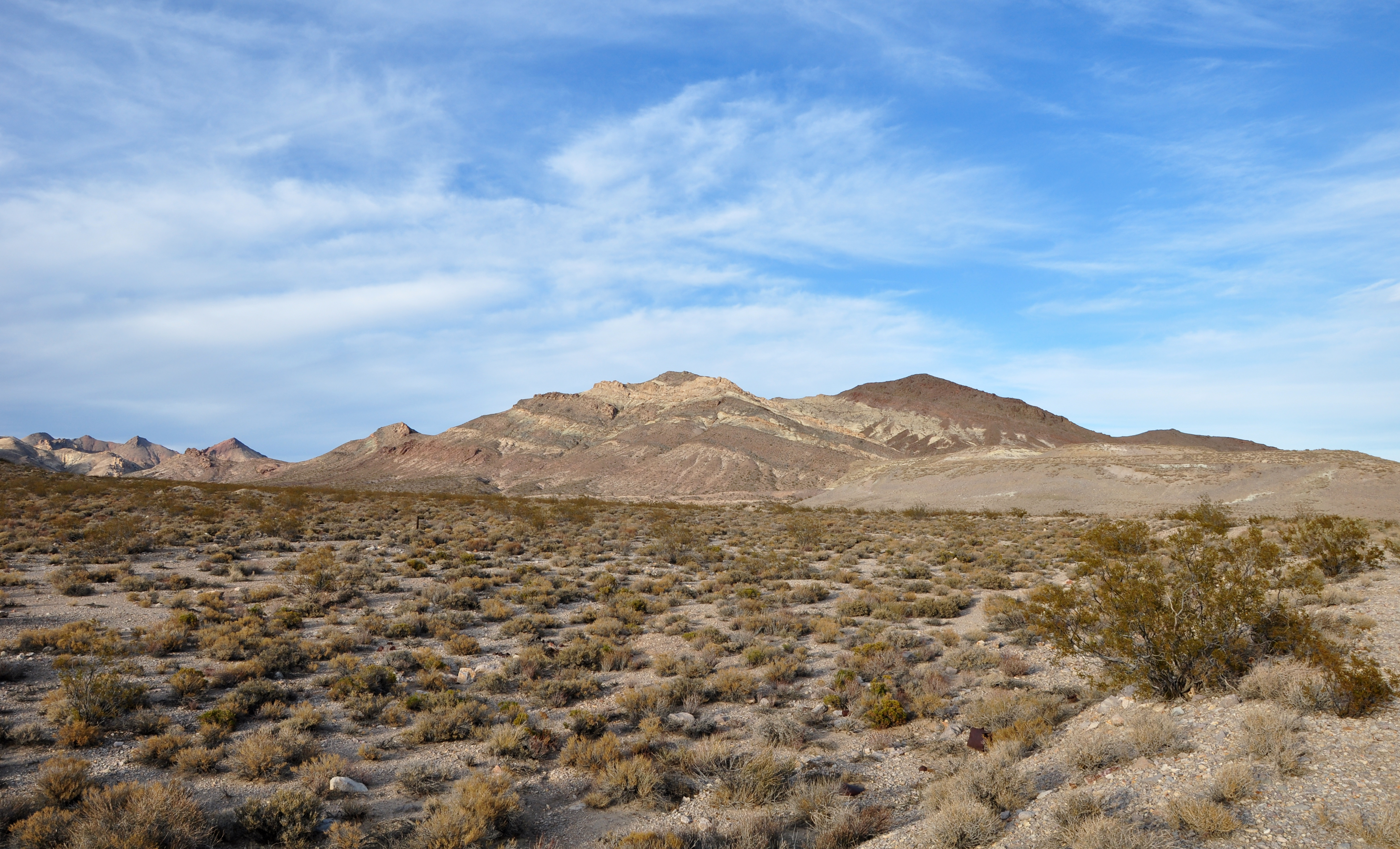
Amargosa Desert, 2009 — Finetooth, Wikimedia Commons, CC BY-SA 3.0.
Shady Lady Ranch, 2007 — Sydney and Russell Poore, Wikimedia Commons, CC BY-SA 3.0.
Alien Cathouse, 2022 — Quincylvania, Wikimedia Commons, CC0 1.0.
Beatty, Nevada, from the air, 2009 — Craig Howell, Wikimedia Commons, CC BY 2.0.
U.S. Route 95 between Beatty and Scotty’s Junction, 2008 — Fietsbel, Wikimedia Commons, CC BY-SA 3.0.
Esmeralda County courthouse, 2026 — © 2026 by Amelia Hollis, Wikimedia Commons, CC BY 4.0.
Leave a Reply